
- Article by: SLOlla, MJoco
- Provincial Agriculture Center
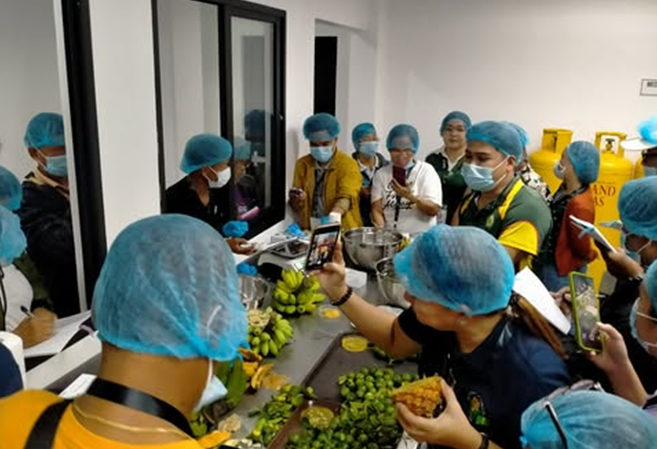
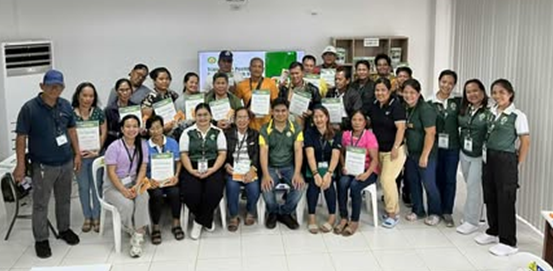
The Provincial Government of Oriental Mindoro, through the Provincial Agriculturist’s Office (PAgO), continues to strengthen the local agricultural sector by conducting a specialized two-day training on “Postharvest Handling of High-Value Commercial Crops Focusing on Banana, Calamansi, and Lowland Vegetables”, held on September 9–10, 2025, at the Provincial Agriculture Center, Merit, Victoria, the activity gathered 30 participants representing various Rural-Based Organizations (RBOs) and Local Government Units (LGUs).
The training was led by Provincial Agriculturist Ms. Christine M. Pine with the support of Engr. Randy A. Joco of Mindoro State University. Designed to bridge the critical gap between farm harvest and market delivery, the program focused on the physiological needs of bananas, calamansi, and lowland vegetables. Its primary objectives were to reduce postharvest losses, enhance product quality, and ensure that locally produced crops meet ASEAN standards for both domestic and export markets.
The first day centered on the proper handling of bananas and calamansi, emphasizing the principle that crop quality can only be maintained and not improved after harvest. Engr. Joco highlighted precise interventions to prevent damage, including harvesting bananas between 9:00 AM and 3:00 PM to avoid latex burns and harvesting calamansi in the late morning to prevent oleocellosis or oil spotting. Participants also learned essential postharvest practices such as washing bananas with alum-treated water to prevent crown rot and curing calamansi prior to sorting to minimize peel injury. The session underscored the importance of using appropriate tools, such as ventilated plastic crates and pruning shears, to reduce compression and mechanical damage that often result in substantial financial losses.
On the second day, discussions shifted to lowland vegetables and hands-on skill development. Participants explored preservation techniques for crops such as eggplant, tomato, and ginger, with particular emphasis on pre-cooling and hydro-cooling methods to immediately remove field heat after harvest. A practical workshop followed, where participants used refractometers to measure sugar content and pH pens to assess acidity, providing a scientific basis for determining crop maturity and market readiness.
Through this interactive approach, the participants gained confidence in identifying quality produce suitable for premium markets. In her closing message, Ms. Christine M. Pine encouraged participants to immediately apply the techniques learned, emphasizing that preserving quality is one of the most effective ways to access higher-value markets and ensure sustainable livelihoods for farming communities across Oriental Mindoro.●